From ambition to application: what Kumamoto tells us about the state of Nature Positive
Having attended the first Global Nature Positive Summit in Sydney in 2024, I arrived in Kumamoto with a clear point of comparison. The difference was apparent from the opening plenary.
Two years ago, much of the conversation centred on defining nature positive and persuading businesses why it mattered. In Kumamoto, that debate had largely moved on. Participants spoke confidently about the concept, treated it as key elment of business decision making, and focused on what implementation could look like. That is meaningful progress in a relatively short period of time.
Business has moved from commitment to capability
Perhaps the clearest sign of that progress was the breadth and depth of corporate participation.
Japanese businesses were strongly represented across sectors, from agriculture and food production to real estate and finance. More importantly, companies weren't simply reaffirming commitments, they were sharing how nature is beginning to be integrated into business decisions.
Food and beverage companies discussed managing water dependencies across global supply chains. Investors explained how nature-related risks are being incorporated into investment decisions and portfolio management. We are beginning to have operational conversations, not aspirational statements.
There is, however, an important caveat.
Much of what we heard is still embryonic and restricted to leadership companies. These companies are developing approaches, piloting new methods and setting ambitions. The direction of travel is incredibly encouraging, but widespread delivery and sector change is still ahead of us.

The challenge for the next two years
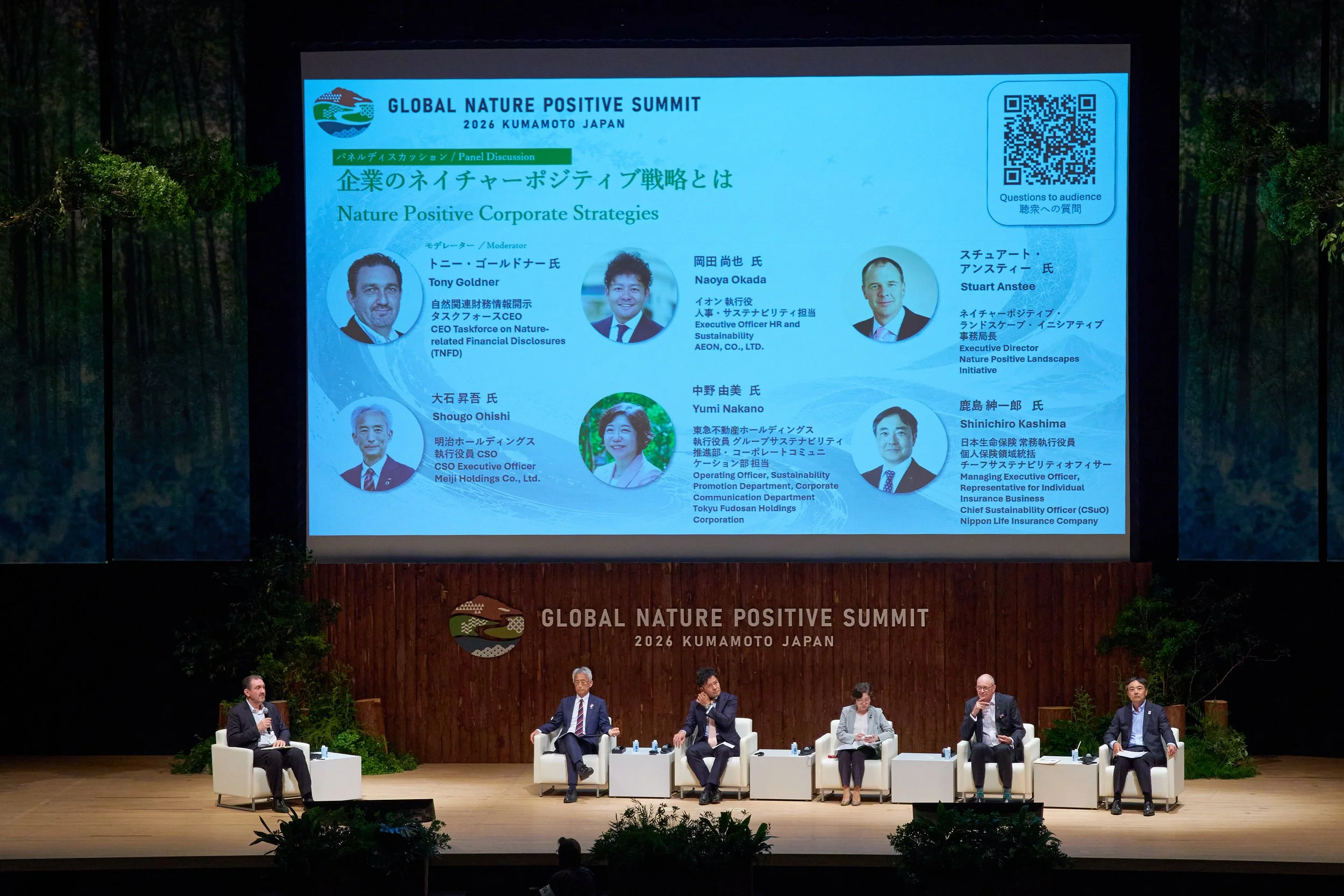
The NPLI participated in several sessions during the Summit including a panel on how organisations can build nature positive strategies that actually deliver and in closing the discussion I laid down a challenge to the audience.
The progress from Sydney to Kumamoto has been significant but the next stage is fundamentally different. Success at the next Summit in India will not be measured by more ambitious commitments or more sophisticated frameworks but by implementation and most importnantly outcomes
By then, we need to see documented examples of nature-positive action being delivered on the ground, together with evidence of progress to achieving nature positive outcomes.
This means translating corporate ambition into operational reality. Rooting nature positive where investment decisions are made, supply chains are managed, and land-use outcomes are ultimately determined.
The conversation now needs to shift from why to how.

Why this matters for the Nature Positive Landscapes Initiative
For me, Kumamoto reinforced the relevance of the Nature Positive Landscapes Initiative's central proposition: creating practical demonstrations that others can learn from, adapt and replicate.
The sector now needs to move beyond describing nature positive in principle and become much better at explaining what it actually takes to deliver. What does implementation look like? What capabilities are required? What are the costs, trade-offs and barriers? And what outcomes can realistically be expected?
Answering those questions honestly is critical. Credibility depends not only on showcasing success, but also on acknowledging the complexity and barriers that will hold us back. Without a realistic understanding of the challenges, there is no credible pathway to scaling nature-positive practice.
That is precisely the role our landscape demonstrations and Community of Practice are designed to play.
Looking ahead
Nature positive has clearly matured but like a toddler we are still an little bit unsteady on our feet. The question is no longer whether businesses should engage but it is how quickly they can embed nature into the decisions that shape their operations, investments and supply chains.
The momentum is real. The next test is whether it can be backed by practical evidence: sector by sector, landscape by landscape, demonstrating what changes in practice, what value is created, and what lessons can be scaled.
That is the challenge between now and next Summit (and 2030), and one the Nature Positive Landscapes Initiative is committed to helping address.
Lastly, our congratulations to Marco Lambertini, Gavin Edwards and the rest of the Nature Positive Initiative team on the Summit and the success they are having driving forward the global discussions on Nature Positive!